
Charming Pet Treat Jars: Keep Treat Time Cute & Crumb-Free

Estimated reading time: 17 minutes
How to Choose a Pet Treat Jar That Actually Works for Real Life
A pet treat jar seems like an easy little purchase: find something cute, pour in treats, and feel charmingly organized. Then real life joins the conversation. The lid is awkward. The opening is too small. The dog learns the sound of ceramic from two rooms away. The cat discovers the jar is not as “out of reach” as you believed. You may also like Pet Travel Essentials: A Charming Guide for Smooth Journeys for more related ideas.
The best pet treat jar is not just the cutest one on the counter. It should keep treats reasonably fresh, be easy to clean, fit your routine, and stay safely placed away from paws, noses, tails, elbows, and grocery bag avalanches. You may also like Summer Pet Care Essentials: Keep Your Furry Friend Cool & Cozy for more related ideas.
If you are choosing a dog treat jar, cat treat jar, or cute pet treat container as a gift, the practical details matter just as much as the look. A good jar should make treat time simpler, not turn your kitchen into a storage puzzle with crumbs. You may also like Transform Mealtime with Practical Pet Feeding Accessories for more related ideas.
Every pet is different, so use this as general guidance, not a replacement for professional advice. If your pet has health, diet, anxiety, injury, or serious behavior concerns, check with a veterinarian or qualified professional before trying something new. You can also check out 3D Cat Butt Bag Clip Set for Snacks and Bread for a cute little extra.
Table of Contents
- The Quick Answer: What Makes a Good Pet Treat Jar?
- How to Choose a Pet Treat Jar for Your Routine
- Materials, Lids, and Openings: The Details That Matter
- Freshness, Cleaning, and Everyday Care
- Where to Keep a Pet Treat Jar Safely
- Choosing a Cute Pet Treat Container as a Gift
- FAQ: Pet Treat Jar Questions
- What to Do Next?
The Quick Answer: What Makes a Good Pet Treat Jar?
A good pet treat jar should have a secure lid, a practical size, an opening wide enough for easy scooping, and a material that fits where and how you plan to use it. It should also be simple to wash and dry thoroughly. Bonus points if it looks nice enough to leave out without making your kitchen feel like a pet supply aisle moved in permanently.
For most homes, the best choice is a jar that can hold one opened bag of treats without cramming, crushing, or mixing everything together. If you use several treat types, smaller containers may be more useful than one oversized jar. If your pet is extremely food-motivated, choose a lid that is not easy to nudge open and place the jar somewhere your pet cannot reach.
The jar should match the treat, too. Crunchy biscuits, freeze-dried treats, soft chews, dental treats, and tiny training rewards do not all store the same way. Some come in resealable packaging designed to protect freshness. In that case, you may prefer placing the whole inner bag inside the jar rather than dumping the treats directly into it.
- For daily dog rewards: Choose a sturdy dog treat jar with a wide mouth and easy-grip lid.
- For cats: Choose a smaller cat treat jar with a secure lid and keep it away from curious paws.
- For the kitchen counter: Prioritize stability, easy cleaning, and a lid that closes neatly.
- For the pantry: Prioritize labels, stackability, and containers that are easy to wipe or wash.
- For gifting: Choose a useful size and avoid anything too fragile or overly specific unless you know the recipient’s home style.
The biggest mistake is choosing only by appearance. A jar can be adorable and still be annoying if the lid squeaks, the seal is weak, or the opening turns every refill into crumb confetti.
How to Choose a Pet Treat Jar for Your Routine
The right pet treat jar depends on how treats actually move through your day. Some pets get a small biscuit after a walk. Some get training rewards during quick practice sessions. Some cats receive a tiny snack at bedtime and then act as if the household has entered a legally binding treat contract.
Before choosing a jar, think about when, where, and how often you reach for treats. A pretty container in the wrong place is still the wrong container.
Match the Jar to Treat Size
Start with the treats themselves. Large dog biscuits need more room and a wider opening. Tiny training treats need a container that does not swallow your entire hand every time you reach for one. Soft treats may leave oils or residue behind, so the jar should be easy to wash thoroughly.
If you buy treats in large bags, avoid assuming the biggest jar is automatically best. Oversized jars can encourage mixing old and new treats, which makes it harder to track freshness. They also take up more space than most people expect. A medium jar that holds your usual open bag may be more practical.
For households with multiple pets, separate jars can prevent confusion. A dog treat jar by the leash may hold walk rewards, while a smaller cat treat jar might live in a cabinet. If pets eat different treats, keeping containers separate and labeled is a simple habit that can prevent mix-ups.
Think About Your Treat Routine
Location matters. If treats are part of your walk routine, a jar near the door may make sense. If treats are mostly for bedtime, a small container in a secure cabinet may be better. If you use treats for occasional rewards during grooming, nail trims, or calm handling, you may want a jar somewhere easy for adults to reach but not sitting in the open all day.
Consider how much effort the lid requires. A tight clamp lid may be great for freshness, but if you need two hands and a pep talk to open it, you may not love it during everyday use. A loose decorative lid may be too easy for a clever pet to bump, paw, or nose open.
Before buying, ask yourself a few quick questions:
- Will this jar hold the treats I buy most often?
- Can I open it easily while holding a leash or scoop?
- Is the opening wide enough for refilling and cleaning?
- Can my pet reach it, knock it over, or learn the lid faster than expected?
- Will I still like using it after the “new cute thing” feeling wears off?
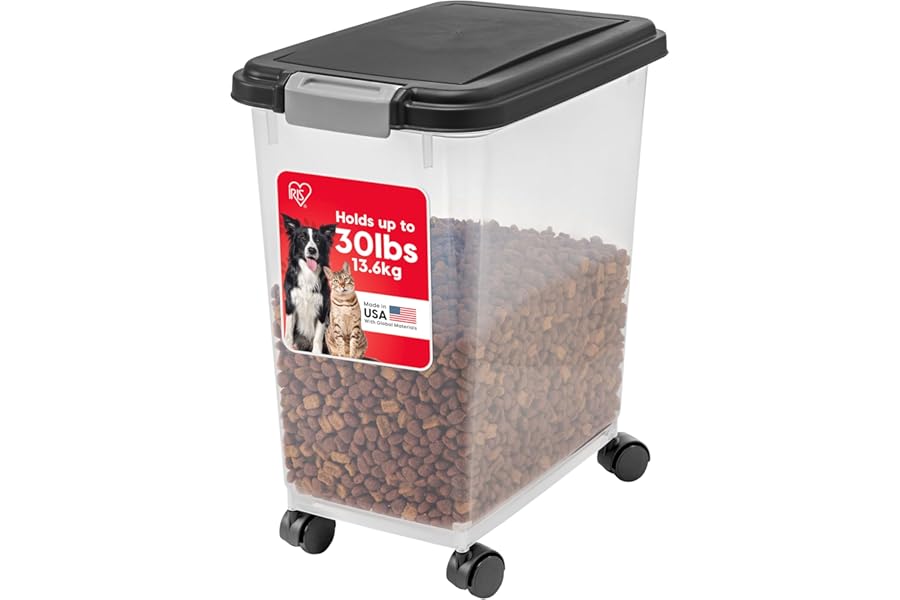
IRIS USA Airtight Pet Food Container
A helpful pick for everyday pet-parent life
Keep your pet's food fresh and easy to move with this container.
See Today’s Price on AmazonAffiliate pick, we may earn a commission at no extra cost to you.
Materials, Lids, and Openings: The Details That Matter
Pet treat jars come in ceramic, glass, stainless steel, plastic, stoneware, bamboo-lidded styles, and decorative combinations. Each can work well, but each has tradeoffs. The goal is not to find the one perfect material. It is to choose the one that fits your home, your pet, and your tolerance for washing crumbs out of corners.
Common Jar Materials
Ceramic and stoneware jars are popular because they look warm, homey, and giftable. They often have a nice weight, which helps them feel stable on a counter. The downside is that they can chip, crack, or break if dropped, so placement matters.
Glass jars make it easy to see when treats are running low. They can look tidy and classic, especially in a pantry. However, glass is breakable and may not be the best choice for high-traffic spots or homes where pets can reach the surface.
Stainless steel can be durable, lightweight, and easy to wipe down. It is often a good choice for modern kitchens or busy households. Depending on the design, it may not let you see the contents, so labels can help.
Plastic containers can be lightweight, practical, and less breakable. Choose sturdy, food-storage-style plastic when possible, and avoid containers that hold odors, stain easily, or develop scratches where crumbs and residue can collect.
Wood or bamboo lids can look lovely, but check the care instructions. Wood-style lids may not tolerate soaking, and they can be less ideal for oily treats if residue builds up around the seal.
Lid, Opening, and Base Features
The lid is where many treat jars succeed or fail. A cute pet treat container with a poorly fitting lid is mostly a decorative bowl with ambition.
An airtight or snug-fitting lid may help maintain texture and reduce exposure to air, especially for crunchy treats. That said, a jar does not magically reset the freshness clock. Always follow the storage instructions on the treat packaging, and do not keep treats longer than recommended just because they are in a nice container.
Look at how the lid opens. Can you lift it easily with one hand? Does it require twisting, clamping, or pulling? Does it make a loud sound that will summon your pet from another room? The sound may not matter, or it may matter very much.
The opening should be wide enough for your hand, a scoop, or the treat size you use most often. Narrow openings may look elegant, but they can make refilling messy. Wide openings are easier to clean and fill, especially for chunky biscuits or dental chews. If you plan to keep the original treat bag inside the jar, measure the bag width before buying.
Also check the base. A tall, narrow jar may tip more easily than a shorter, wider one. A heavy lid on a lightweight base can be awkward. A jar with a rubber or silicone ring on the bottom may stay put better on smooth counters, though you should still place it where it cannot be knocked down.
Freshness, Cleaning, and Everyday Care
Treat storage is partly about freshness and partly about not creating a crumb museum. Even dry treats leave residue over time. Soft treats can leave oils. Freeze-dried treats can leave powder.
Before emptying treats into a jar, read the package. Some treats are best kept in their original resealable bag. Others are fine in a clean, dry container. If the packaging includes storage instructions, expiration dates, lot numbers, or feeding guidance, keep that information. You can cut out the label, tape it to the bottom of the jar, or keep the original bag inside the container.
Moist, soft, fresh, or refrigerated treats need special care. Do not move them into a decorative jar unless the treat packaging says that kind of storage is appropriate. Some treats need refrigeration after opening. A pretty jar on the counter is not worth spoiled snacks.
For everyday dry treats, use these practical habits:
- Start with a clean, dry jar. Moisture can affect texture and freshness.
- Avoid topping off forever. Finish or empty the old batch before adding new treats.
- Wash between refills when needed. This is especially important for oily, crumbly, or strong-smelling treats.
- Dry completely before refilling. Moisture can hide under the lid or around the seal.
- Check treats before serving. If they smell off, look unusual, feel damp when they should be dry, or are past the recommended date, do not use them.
Cleaning depends on the material. Some jars may be dishwasher-safe; others should be hand-washed. Always check care instructions. Silicone seals may need to be removed and cleaned separately if crumbs collect underneath. If the lid has grooves, clamps, or decorative edges, inspect those areas occasionally.
If you use a scoop, wash that too. Scoops often touch hands, counters, and the inside of the jar. A dedicated scoop can be convenient, but it should be kept clean and stored in a way that does not introduce moisture or household debris into the treats.
For strong-smelling treats, consider keeping them in the original sealed bag inside the jar. This gives you the look of a tidy treat container while keeping the manufacturer’s packaging intact and may help prevent lingering odors.
Where to Keep a Pet Treat Jar Safely
A pet treat jar should be easy for humans to reach and difficult for pets to access. That sounds obvious until you meet a cat who can open cabinets, a dog who can surf counters, or a puppy who believes every household object has a chewable destiny.
Place the jar on a stable surface away from edges. Avoid spots where it can be knocked over by bags, elbows, wagging tails, or a pet jumping up. If the jar is breakable, keep it somewhere extra secure. Broken ceramic or glass creates a hazard, and spilled treats can lead to a pet eating more than intended before anyone notices.
For dogs, counter height is not always enough. Some dogs can reach farther than expected, especially if there is a chair, bench, open dishwasher door, or low table nearby. A dog treat jar may be convenient near the door, but make sure it is not on a low entry table where a determined nose can push the lid off.
For cats, “high shelf” does not always mean “safe shelf.” Cats climb, leap, investigate, and occasionally test gravity with confidence. A cat treat jar is often best kept inside a closed cabinet, pantry, or drawer, especially if your cat is food-motivated.
If children help with pet care, choose a jar that is safe for them to handle and teach them how treats are given in your household. Treat jars should not be treated like open candy bowls. Keep portion guidance from the treat package available, and make sure everyone knows who is allowed to give treats and how often.
A few placement ideas that often work well:
- Inside a pantry: Good for larger containers, extra bags, and multi-pet households.
- In a closed cabinet: Useful for cats, clever dogs, and breakable jars.
- On a deep counter corner: Works if the jar is stable and pets cannot reach it.
- Near the leash area: Convenient for walk rewards, as long as the jar is secure and out of reach.
- In a utility room: Practical for homes where pet supplies already live together.
Do not use the jar to store treats that are not intended for your pet, and do not mix different pets’ treats unless they are meant for all of them. If a treat is for one pet only, label it clearly. This matters in homes with different species, sizes, allergies, sensitivities, or special feeding instructions.
Choosing a Cute Pet Treat Container as a Gift
A cute pet treat container can be a thoughtful gift because it is useful without being too personal. It says, “I know your pet is part of the household,” without requiring you to know the exact brand of kibble, the dog’s neck size, or whether the cat has strong opinions about salmon this month.
For gifting, choose practicality first and style second. The recipient may have limited counter space, a specific kitchen look, or a pet with impressive snack-detective skills. A neutral jar with a secure lid is usually safer than something oversized, fragile, or covered in wording that may not fit their style.
Medium sizes tend to be the most gift-friendly. A very small jar may not hold enough for a dog household. A huge jar may be awkward for a cat parent or anyone with a small kitchen. If you know the recipient has multiple pets, consider whether separate smaller containers would be more useful than one large one.
Think about the home, too. A ceramic jar may be lovely for someone with a calm kitchen counter and a senior dog who does not climb. A lightweight, non-breakable container may be better for a busy family, a small apartment, or a household with a young pet still learning the difference between “mine” and “absolutely not yours.”
When in doubt, avoid overly specific labels unless you know they apply. A jar that says “Dog Treats” is not ideal for a cat household, and a cat treat jar may not be useful for someone with three dogs and zero cats. Generic wording like “Treats” can be more flexible, especially for multi-pet homes.
Also consider care. A gift that requires delicate hand-washing, special lid maintenance, or careful placement may not be the best fit for someone who prefers low-effort pet gear. The most appreciated gifts are often the ones that quietly solve a daily annoyance: messy bags, stale crumbs, cluttered counters, or treat packaging that refuses to stand upright.
If you are choosing a jar for your own home, style still matters. You are more likely to use a container you enjoy seeing. Just let the practical details have a vote. A pet treat jar can be cute, but it should also behave itself.
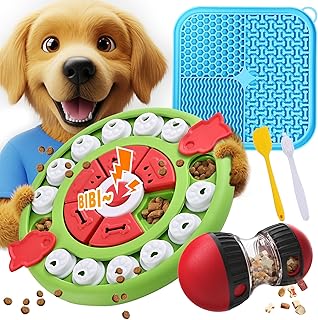
Dog Puzzle Feeder for Small Breeds
One more thoughtful pick before you go
Keep your pup entertained and engaged with this fun puzzle feeder.
See Today’s Price on AmazonAffiliate pick, we may earn a commission at no extra cost to you.
FAQ: Pet Treat Jar Questions
Does a pet treat jar need to be airtight?
An airtight or snug-fitting lid can be useful for many dry treats because it may help reduce air exposure and preserve texture. However, not every treat should be removed from its original packaging, and an airtight jar does not make treats last forever. Always follow the storage instructions and dates on the package.
Should I dump treats into the jar or keep them in the original bag?
Either can work, depending on the treat. Keeping the original bag inside the jar preserves storage directions, expiration details, lot information, and resealable packaging. Dumping treats directly into the jar can be convenient, but the jar should be clean, dry, and appropriate for that treat type.
Is there a difference between a dog treat jar and a cat treat jar?
The main differences are usually size, placement, and access. A dog treat jar often needs more capacity and a wider opening for larger biscuits. A cat treat jar can usually be smaller, but it may need to be stored more securely if your cat climbs, paws, or knocks things down.
How often should I wash a pet treat jar?
Wash it whenever residue, crumbs, odor, or oils build up, and between refills if the treats are messy or strong-smelling. For dry biscuits, you may not need to wash after every small refill, but avoid endlessly topping off old crumbs with new treats. Make sure the jar is completely dry before adding treats again.
What is the best material for a pet treat jar?
There is no single best material for every home. Ceramic and stoneware look nice but can break. Glass is easy to see through but also breakable. Stainless steel is durable but may need labeling. Plastic can be practical and lightweight, but it should be sturdy and easy to clean.
What size treat jar should I choose?
Choose a size that fits the treats you actually buy. For many homes, a jar that holds one opened bag or the original bag itself is enough. If you use several treat types, two smaller jars may be easier to manage than one large container.
Can I use a regular kitchen canister as a pet treat jar?
Often, yes, as long as it is clean, dry, suitable for food storage, easy to open, and safe to place where your pet cannot reach it. Avoid containers with lingering odors, damaged interiors, loose lids, or materials that are hard to clean.
What to Do Next?
Before choosing a pet treat jar, take a quick look at your real routine: the treats you buy most often, where you reach for them, who gives them, and whether your pet is likely to investigate the container. Then choose a jar with the right size, secure lid, easy-clean material, and safe placement.
If you are gifting one, keep it practical, neutral, and easy to use. If you are choosing one for your own home, let it be cute enough to enjoy and sensible enough to survive daily life.
Save this guide for the next time you are comparing treat containers, or share it with the pet parent who currently has three half-open treat bags in a cabinet and one very interested animal pretending not to know.